
What Does a Kitchen Remodel Cost in Oklahoma City?
A Realistic Budget and Timeline Guide for Oklahoma City Homeowners.
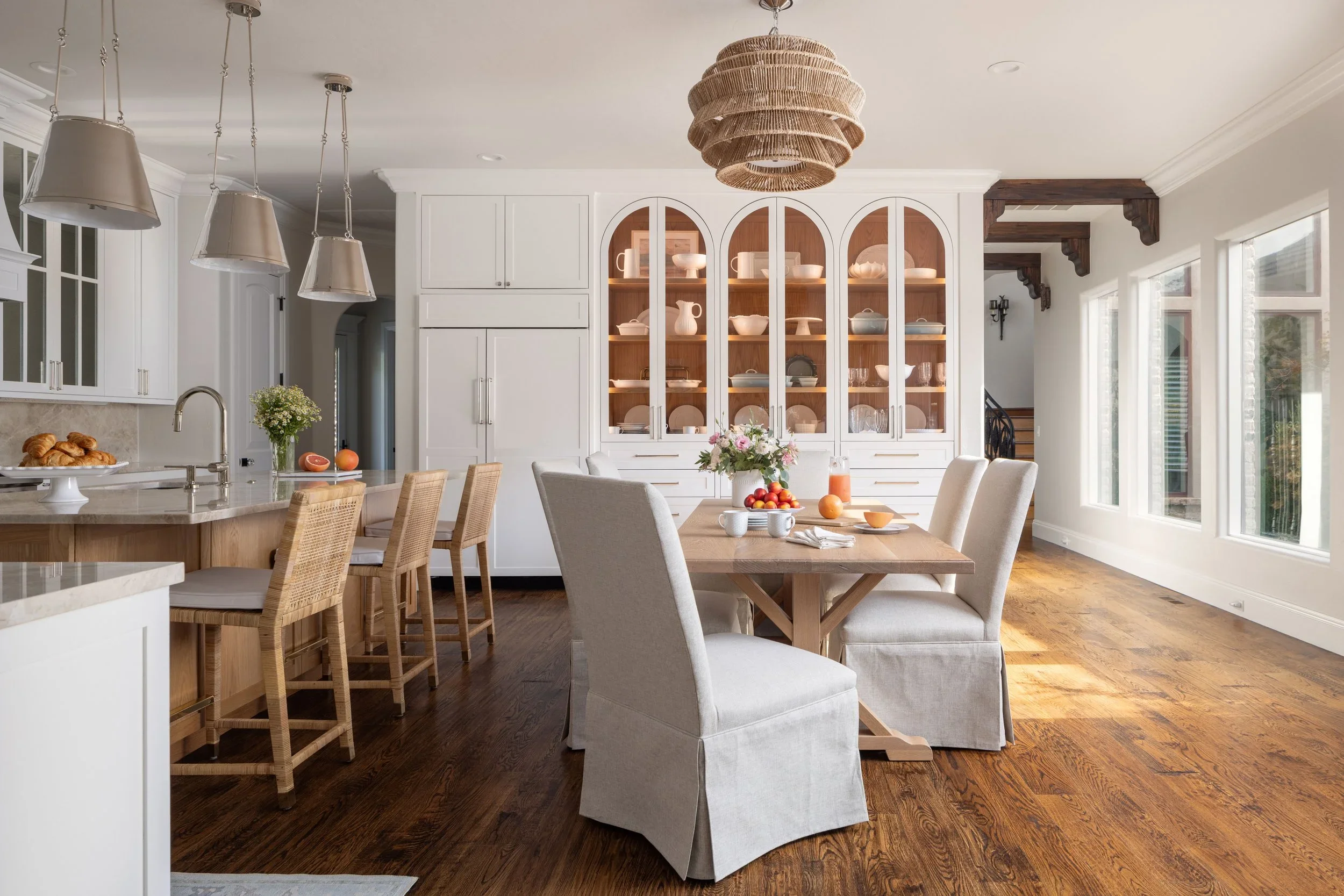
A kitchen remodel is one of the most personal investments you'll make in your home. It shapes how your mornings begin, how your family gathers, and how you entertain. It's also one of the most complex projects a homeowner will ever take on, and one of the most misunderstood when it comes to budget and timeline.
Here's what Oklahoma City homeowners should realistically expect.
How Much Does a Kitchen Remodel Cost in Oklahoma City?
There's no universal number. Every project reflects your layout, your selections, and how your family lives. That said, these are the ranges we most commonly see:
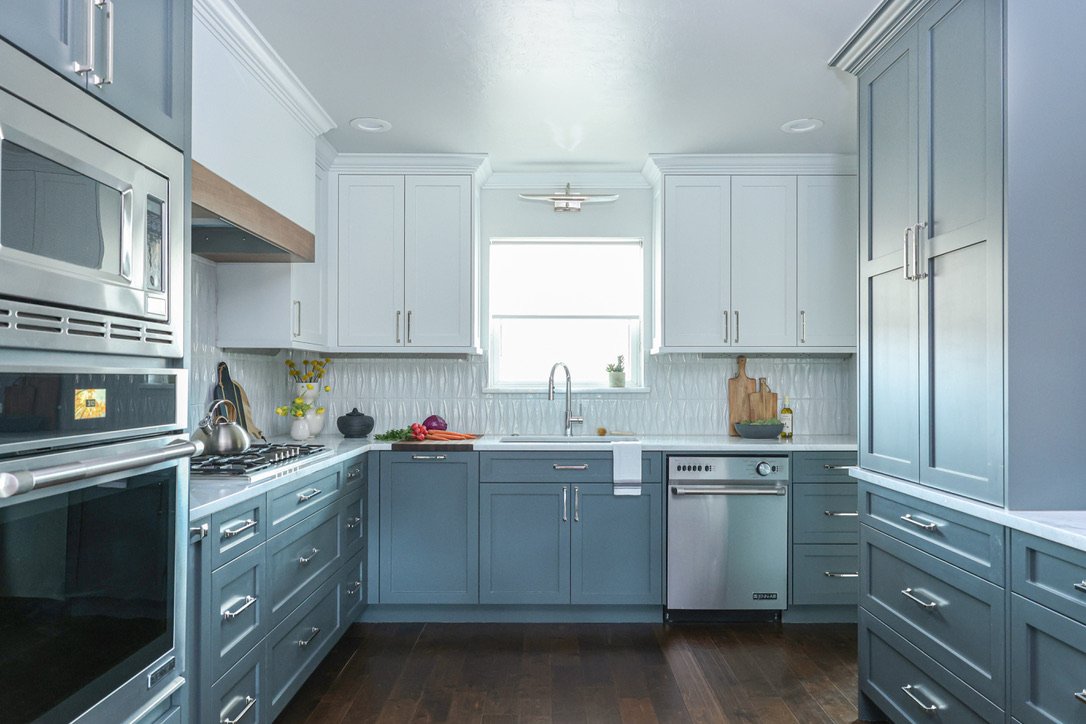
Kitchen Refresh |
Starting at $60,000
Keeps the existing layout while refreshing finishes and function: new cabinetry (refinished or semi-custom), countertops, backsplash, lighting, fixtures, and appliances. A smart choice when your kitchen's bones are solid but it's due for a meaningful refresh.
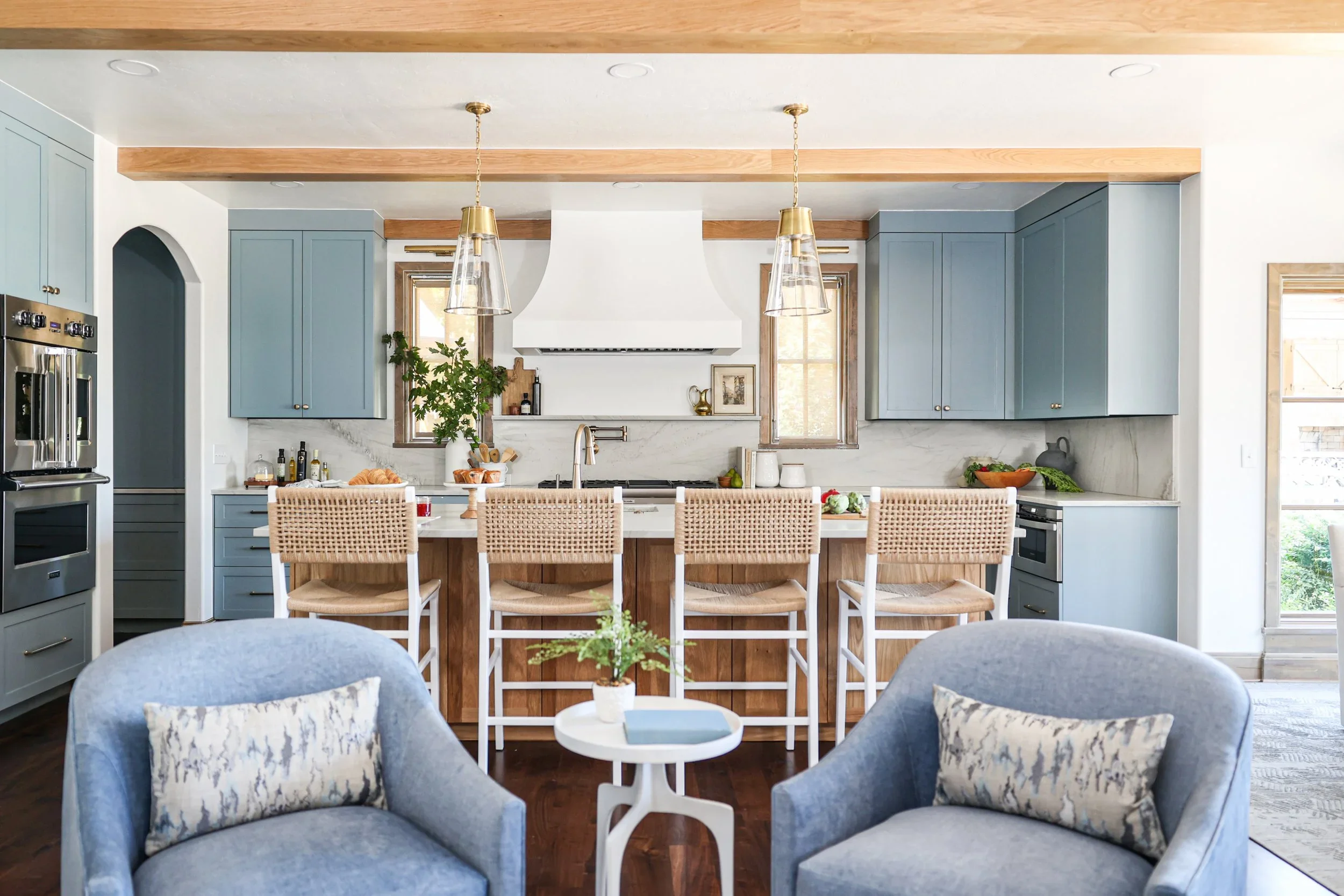
Full Kitchen Remodel |
Starting at $75,000
This is where real transformation happens. Expect custom or semi-custom cabinetry, island redesign, stone countertops, updated plumbing and electrical, and often a partial wall removal. These projects deliver lasting improvements in both daily function and home value.

Luxury Kitchen Remodel |
Starting at $150,000
Starting at $150,000 with mid-range appliances, luxury remodels are fully custom and designed around how you cook, entertain, and live. Expect custom cabinetry, structural changes, specialty stone, integrated refrigeration, butler's pantry additions, and architectural ceiling details.
What Drives the Cost of a Kitchen Remodel?
The biggest cost factors aren't usually cosmetic; they happen behind the walls.
Layout changes are often the most impactful investment. Moving plumbing, relocating appliances, or opening walls increases construction complexity, but it's frequently what creates the most dramatic improvement in daily function.
Appliances can represent $15,000 to $40,000 of a project budget on their own. They also need to be selected early as cabinet sizing, ventilation, and electrical planning all depend on appliance specs, and many luxury brands carry 6-12 week lead times.
Materials such as natural stone slabs, handcrafted tile, and specialty finishes affect both budget and schedule. The earlier selections are made, the smoother construction goes.
How Long Does a Kitchen Remodel Take in Oklahoma City?
Plan for 4 to 8 months from design through final walkthrough, and potentially longer depending on the complexity of the design. Active construction is typically the shortest phase.
| Phase | Timeframe |
|---|---|
| Design & Selections | 4-8 weeks |
| Ordering & Lead Times | 6-14 weeks |
| Demolition & Rough Work | 2-4 weeks |
| Installation | 4-8 weeks |
| Finish Work & Walkthrough | 2-3 weeks |
The planning phase is where projects succeed or stall. Rushing selections and material choices is the single most common reason remodels run over schedule.
A Note on Older Oklahoma City Homes
Homes built before the early 2000s frequently reveal surprises once walls open up: undersized electrical panels, outdated wiring, hidden water damage, or plumbing that doesn't meet current code. This isn't unusual. It's one of the strongest reasons to work with a team that knows what to expect in OKC's housing stock before construction begins.
We've spent more than 20 years remodeling Oklahoma City homes. Understanding what typically lives behind the walls helps us plan realistically, communicate clearly, and keep projects on track when conditions arise.
The Design Decisions That Matter Most
Not all choices carry equal weight. These tend to have the greatest impact on how a kitchen feels and functions long-term:
Layout and workflow. The best kitchen layouts are designed around real life: where groceries land, how many people cook at once, where children gather. Good design supports how you actually live, not just how a kitchen photographs.
Storage that actually works. Deep drawers, pull-out shelving, appliance garages, and dedicated pantry zones often do more for daily function than adding square footage.
Layered lighting. Ambient, task, and accent lighting together create a kitchen that functions well throughout the day and feels warm at night. Lighting is one of the highest-ROI decisions in any remodel.
How Design Directions Works
We manage Oklahoma City kitchen remodels from first conversation to final walkthrough through a fully integrated design-build process.
It begins with a consultation at our OKC design studio, where we talk about how you live, what isn't working, and what you want the home to feel like when the project is complete. From there, we finalize all selections, materials, and construction scope before work begins. Homeowners receive detailed scope documentation, transparent pricing, and a clear construction schedule. No guessing.
During construction, our team manages permits, trade coordination, inspections, and ongoing communication. Before we close a project, we walk the finished space together to make sure every detail is right.
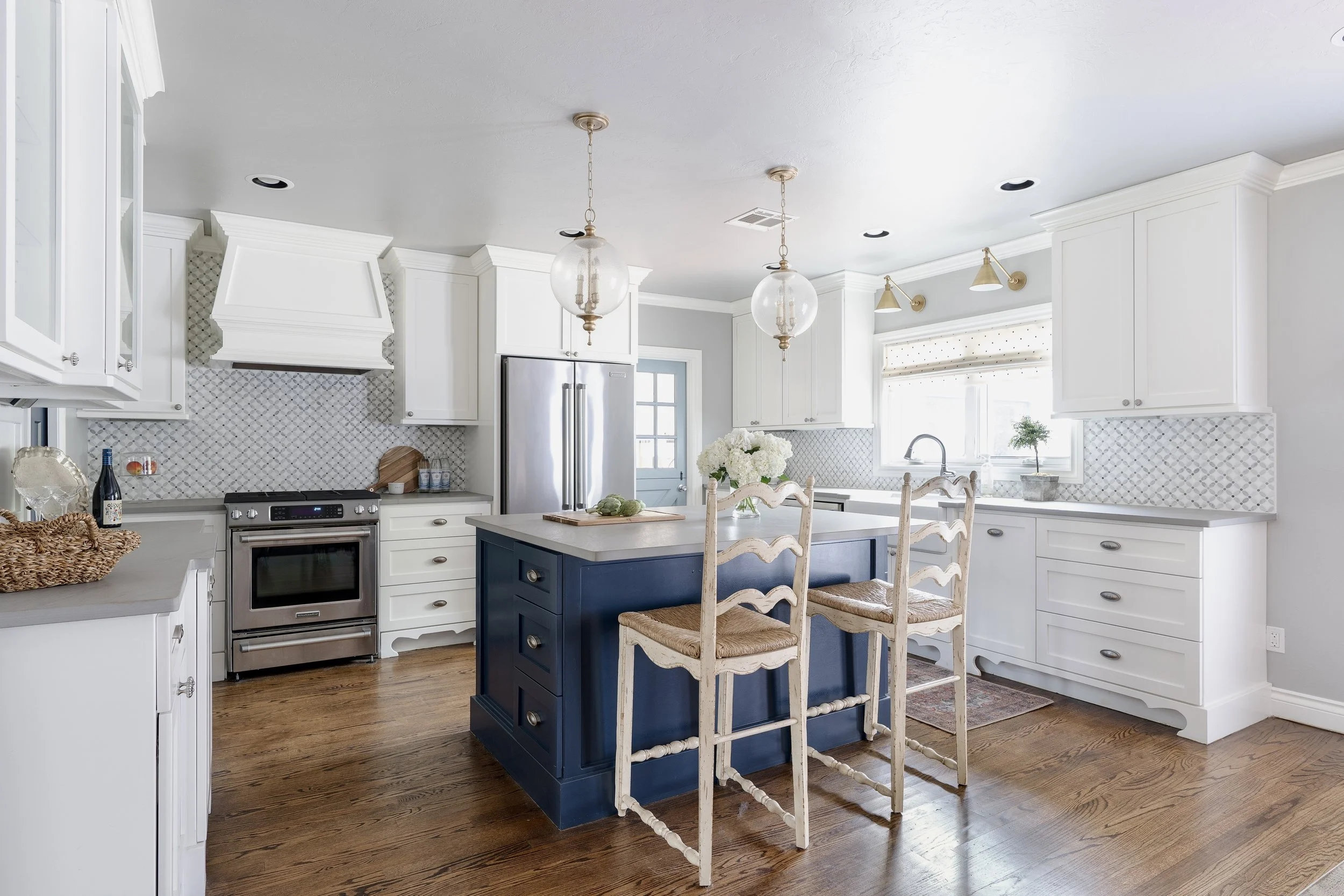
Frequently Asked Questions
-
From the start of demolition through project completion, you should plan to be without a fully functional kitchen. We help clients set up a temporary kitchen space before work begins.
-
Usually, yes, but layout improvements often deliver the most meaningful long-term gains in how your home functions. It's worth the conversation.
-
We communicate findings immediately, explain the impact, and walk you through options before any additional work moves forward. No surprises.
-
Early in the design phase. Cabinet dimensions, ventilation, and electrical planning all depend on appliance specs, and lead times can stretch 6-12 weeks for premium brands.
-
Yes, for most structural, electrical, plumbing, and gas work. A professional remodeling team should handle all permitting and inspections as part of the project.
Ready to Start Planning?
For more than 20 years, Design Directions has helped homeowners throughout Oklahoma City remodel with careful planning, transparent communication, and highly personalized design.
If you're thinking about a kitchen remodel, we'd love to hear about your project.
Countertop Overhangs 101
Countertop overhangs may seem like a small detail, but they play an important role in both the function and appearance of a kitchen. The right overhang depends on the cabinetry style, seating height, and how the space will be used day to day.
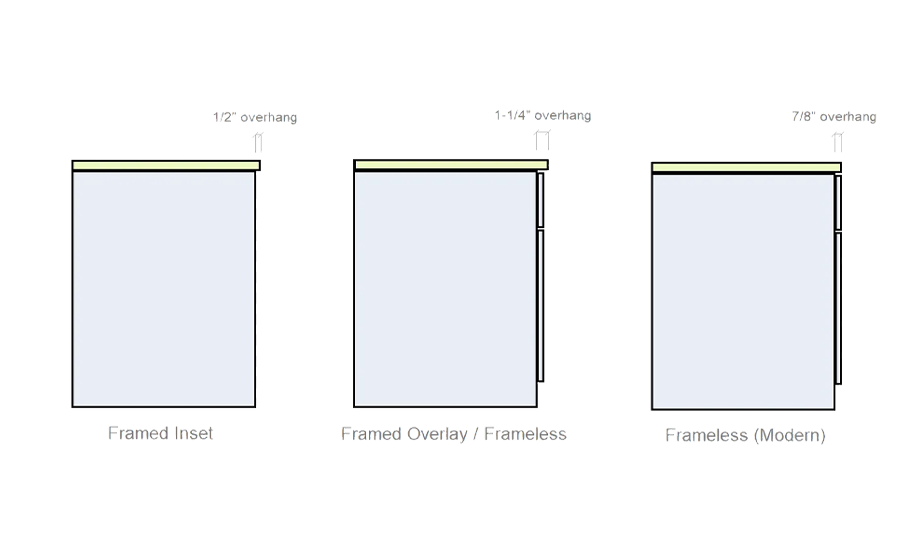
Standard Overhangs
Inset cabinetry requires a different approach than overlay or frameless cabinetry. Because inset doors sit within the cabinet frame, countertops typically extend less beyond the cabinet face than they would on other cabinet styles.
Framed overlay and frameless cabinetry generally use a standard countertop overhang of approximately 1-1/4". Since the doors and drawer fronts project beyond the cabinet box itself, this measurement creates a balanced and consistent appearance throughout the kitchen. Slight adjustments may still be necessary depending on door thicknesses or installation conditions.
Some homeowners prefer a more streamlined, modern appearance on frameless cabinetry by reducing the countertop projection so it aligns more closely with the cabinet fronts. This approach requires especially precise cabinet installation to maintain a consistent front plane across the entire run.
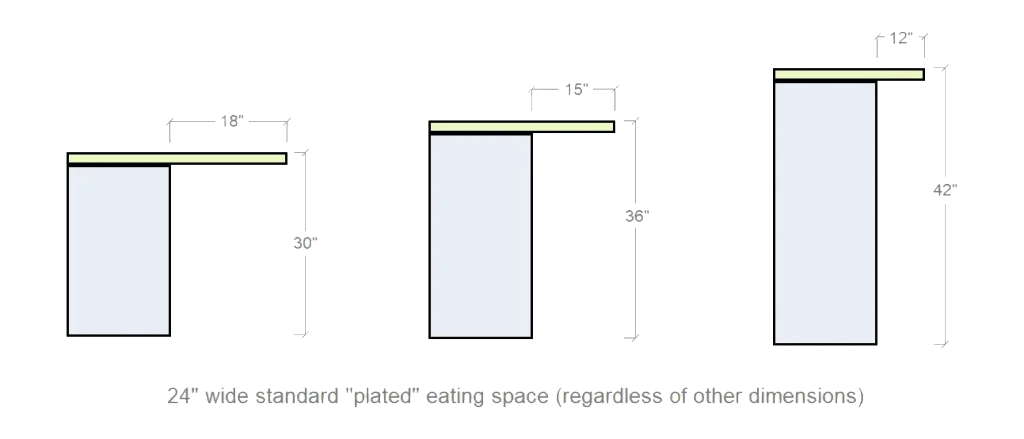
Overhangs at Seating Areas
Seating height directly affects how much countertop overhang is needed for comfortable legroom. Lower seating heights require deeper overhangs, while taller bar-height seating generally requires less.
As a general guideline:
• Table height seating (30") typically requires an 18" overhang
• Counter height seating (36") typically requires a 15" overhang
• Bar height seating (42") typically requires a 12" overhang
For comfortable dining, plan for approximately 24" of width per person at a seating area, regardless of countertop height.
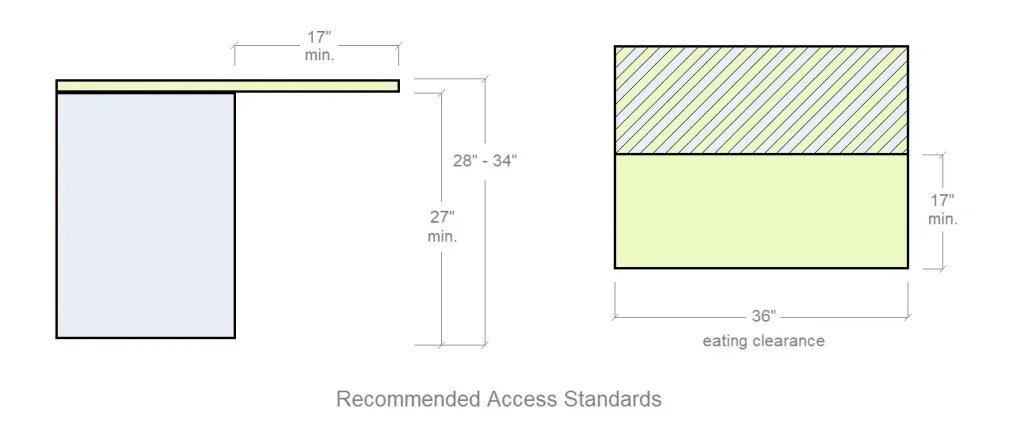
ADA & Accessible Design Standards
When designing for accessibility, countertop clearances become especially important. ADA-friendly work and seating areas should provide a minimum of 17" of depth below the countertop and at least 27" of knee clearance height. Countertop surfaces are generally positioned between 28" and 34" above the floor.
Accessible seating areas should also allow additional width for wheelchair access, with approximately 36" recommended for comfortable use.
Ready to begin planning your kitchen remodel or new build project? We’d love to help guide the process from layout planning through final selections.